Hot Rolled (HR) Trimming Scrap Metal from Coil Slitting
A Complete Guide for Buyers, Exporters & Wire Manufacturers
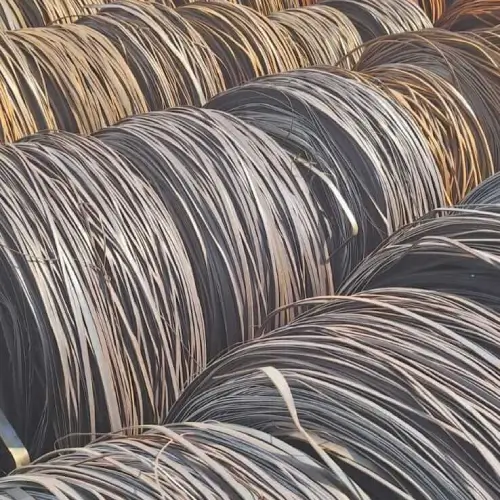
HR trimming scrap metal (Hot Rolled Coil trimming scrap) is a high-value ferrous by-product generated during the slitting of hot rolled steel coils (HRC) at steel service centres.
Steel mills manufacture HR coils to international or domestic standards in wide master coil formats. However, manufacturers across industries — including construction, automotive components, pipe production, and wire drawing — require narrower widths to suit their production lines.
To achieve these exact sizes, master coils are processed through a coil slitting operation, where precision knives cut the coil longitudinally into multiple narrower coils.
During this process, small excess edges are removed to ensure:
-
Tight dimensional tolerances
-
Clean, uniform edges
-
Reduced surface defects
-
Improved downstream performance
These removed edges form what is known as:
-
HR trimming scrap
-
HRC slitting scrap
-
Side coil trimming scrap
-
Bobbin scrap
-
Slitter scrap
-
Hot rolled edge cutting scrap
Although terminology varies across markets, the material itself is fundamentally the same.
How HR Coil Slitting Generates Trimming Scrap
Steel coils that require resizing are transported from the mill to HR coil service centres. These facilities specialise in:
-
Slitting
-
Cut-to-length processing
-
Recoiling
-
Surface inspection
-
Packaging
The Slitting Process Explained
-
The master hot rolled coil is mounted onto a decoiler.
-
The coil passes through a set of precision rotary slitting knives.
-
The knives cut the steel into multiple narrower strips.
-
The finished coils are rewound to customer specification.
-
The outer edge trims are separated and wound or discharged as scrap.
Despite using tight tolerances to minimise waste, small edge sections must still be removed. These strips become HR trimming scrap.
The highest quality trimming scrap is typically produced at dedicated HR coil service centres, where modern machinery ensures consistent width and thickness control. Lower-grade material may also originate from steel pipe cuttings, but slitting scrap remains the preferred grade for re-use applications.
Specification of HR Trimming Scrap
The commercial value of HR trimming scrap depends heavily on its physical characteristics. The width and thickness determine whether the material can be reused or must be downgraded to melting scrap.
Ideal Re-Use Specification:
-
Width: 8mm – 20mm
-
Thickness: 2mm – 6mm
-
Clean, well-rolled strips (not loose or tangled)
-
Free from coatings (non-galvanised, non-painted)
-
Minimal rust or contamination
When trimming scrap falls within these parameters, it becomes suitable for direct re-processing, particularly in wire manufacturing.
Re-Use vs Melting Grade Scrap
✅ Re-Usable HR Trimming Scrap
If the material meets the optimal size range:
-
It can be fed into rolling lines
-
Heated and drawn into new wire products
-
Reprocessed with minimal wastage
-
Sold at a premium compared to melting scrap
🔥 Melting Grade Scrap
If the scrap is:
-
Too wide
-
Too thin
-
Too thick
-
Mixed with contamination
It will typically be classified as general ferrous melting scrap, where it is recycled through a furnace rather than reprocessed directly.
For buyers and importers, controlling specification is critical to maintaining margin and competitiveness.
Collection & Export Process
-
HR trimming scrap is transferred into a dedicated waste stillage or offcut container at the service centre.
-
Once full, it is collected by a contracted scrap metal dealer.
-
The material is transported to a scrapyard for consolidation and storage.
-
Scrap is then loaded into 20ft ocean containers for export.
Proper loading is essential to maximise payload and maintain material condition during shipment.
From the UK, HR trimming scrap is exported globally to specialist buyers, including Tiger International Limited, who distribute to manufacturers across Asia.
Main Export Markets
The strongest demand for HR trimming scrap comes from:
-
Pakistan
-
India
These markets have large wire manufacturing industries producing:
-
Binding wire
-
Nail wire
-
Fencing wire
-
Construction wire
-
Industrial fasteners
Because trimming scrap can be re-rolled rather than melted, it offers a cost-effective alternative to billet or imported wire rod.
Environmental & Carbon Benefits
One of the most important advantages of HR trimming scrap is its environmental impact.
Unlike conventional scrap recycling, which involves melting steel in electric arc furnaces, re-usable trimming scrap:
-
Is fed into rollers
-
Heated and drawn
-
Reformed into wire products
This process:
-
Reduces energy consumption
-
Lowers carbon emissions
-
Minimises material wastage
-
Supports circular economy practices
For manufacturers aiming to reduce Scope 1 and Scope 2 emissions, this form of recycling is significantly more efficient than traditional melting routes.
Why HR Trimming Scrap Is Strategically Valuable
As steel processing technology evolves, industrial manufacturers are becoming more specialised. Tighter tolerances and adaptable machinery mean materials that were once considered waste now have measurable commercial value.
For traders and exporters, HR trimming scrap offers:
-
Higher margin opportunities than HMS
-
Consistent repeat demand
-
Containerised export suitability
-
Lower processing costs for buyers
-
Competitive positioning in Asian markets
With correct sourcing and specification control, trimming scrap becomes a premium secondary raw material rather than a low-grade waste product.
HR Trimming Scrap at Metalscrap.co.uk
At Metalscrap.co.uk, we specialise in sourcing and exporting high-quality HR trimming scrap metal from coil slitting service centres across the UK and Europe.
Our expertise includes:
-
Contract collection from service centres
-
Quality control and specification management
-
Containerised ocean freight logistics
-
Export documentation and compliance
-
Direct supply to international wire manufacturers
With over 20 years of international scrap trading experience, we understand how critical consistency, loading efficiency, and clear specifications are in global scrap metal markets.