Steel Turnings Scrap Metal UK & Export to Asia — A Complete Guide
Scrap Export by Tiger International Ltd
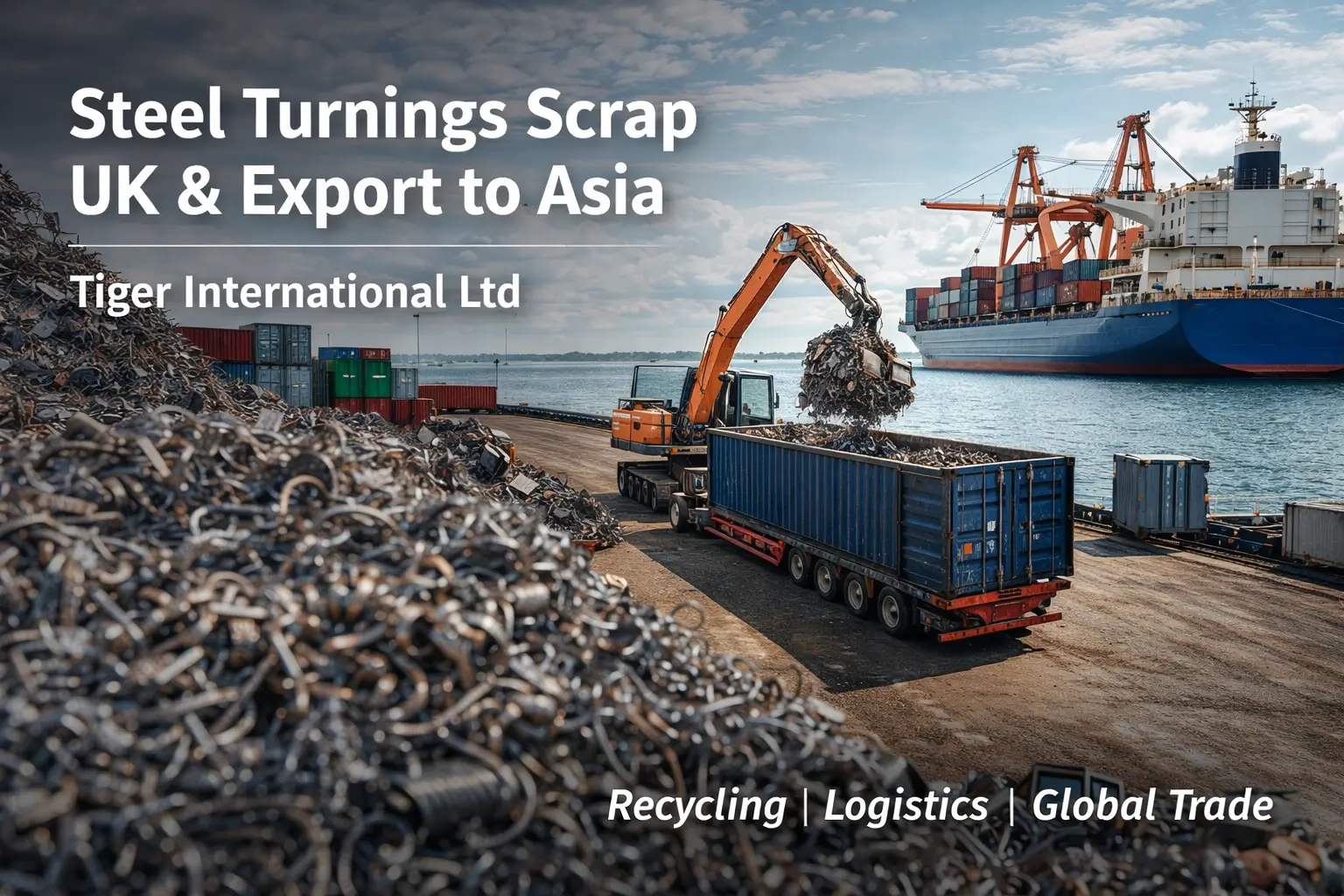
Steel turnings are a common by-product of machining operations in manufacturing and metalworking facilities across the UK. Often referred to as swarf, chips, or filings, these metal residues are generated when steel is cut, drilled, milled, or turned on industrial machinery. Although small in size and often mixed with coolants or oils, steel turnings represent a valuable ferrous scrap grade — especially when properly processed and prepared for recycling.
What Are Steel Turnings?
Steel turnings consist of the spiral, curly fragments produced by machining processes in workshops, fabrication plants, and component factories. While they cannot be reused directly due to their shape and size, steel turnings are recyclable and can be melted down into new steel products. The key to maximising their value lies in cleaning, de-oiling, and bundling them into export-ready grades.
Understanding the nature and standard classifications of turning scrap is important for traders and recyclers. For example, industry specifications (such as those used in Asian markets) differentiate clean turnings from those mixed with iron borings or significant oil contamination — which affects both pricing and usability in furnaces.
UK Steel Scrap Export Trends & Asian Demand
The UK is one of the world’s largest exporters of steel scrap — with approximately 10–11 million tonnes of steel scrap produced annually, and over 80% of that material exported rather than consumed domestically. This exported volume supports global steelmaking, particularly in countries with strong manufacturing and infrastructure demand such as India, Pakistan, Vietnam, Bangladesh, and beyond.
Steel turnings, while a smaller volume component compared with HMS or shredded scrap, contribute to this export ecosystem. Data shows that UK shipments of steel turnings are growing, with hundreds of export consignments reported over recent trade periods — most of which head to Asian markets where steel mills and foundries incorporate these ferrous inputs into electric arc furnaces and recycling furnaces.
The market for UK turnings reflects broader global dynamics: when construction, infrastructure development, and industrial output in Asia are strong, demand for scrap feedstock — including turnings — tightens. Conversely, weak demand phases can compress pricing and slow shipment volumes.
Why Partner with Tiger International Ltd
As a well-established UK-based scrap metal exporter, Tiger International Ltd sources, grades, and exports a wide range of ferrous and non-ferrous scrap material to Asian steel mills and smelters. The company has been trading globally since 2011, leveraging deep experience in international logistics, quality inspection, and structured trade execution.
Tiger’s export process for materials like steel turnings includes:
-
Grading & preparation to meet buyer specifications
-
Cleaning and de-oiling, where necessary
-
Containerised loading and export documentation
-
Reliable logistics & customs handling
-
Long-standing buyer network across Asia
This end-to-end capability means UK scrap producers — from fabrication shops to large industrial yards — can convert what might otherwise be waste into export-ready cargo that meets stringent overseas quality standards.
The Role of Steel Recycling in the Circular Economy
Exporting steel turnings helps support a circular economy by ensuring these metal residues are re-melted into new steel products rather than ending up in landfill. Steel recycling consumes significantly less energy than producing primary steel from iron ore, and imported scrap supports the sustainable expansion of steel output in developing economies.
With increasing global emphasis on carbon reduction and resource efficiency, exportable scrap grades — including steel turnings — have become important inputs for modern electric arc furnace (EAF) based steelmaking.