What Is Coil Edge Cutting Scrap Metal? A Complete Industry Guide
Unlike conventional melting scrap, this material can often be re-used directly in manufacturing, particularly in the wire drawing industry, provided it meets strict dimensional and quality standards.
How Is Coil Edge Cutting Scrap Produced?
During the steel processing stage, wide hot rolled coils are fed into a slitting machine. Rotary knives cut the coil into narrower widths according to customer requirements.
The outer edges of the coil are removed to:
-
Eliminate uneven mill edges
-
Ensure precise width tolerances
-
Improve product finish and quality
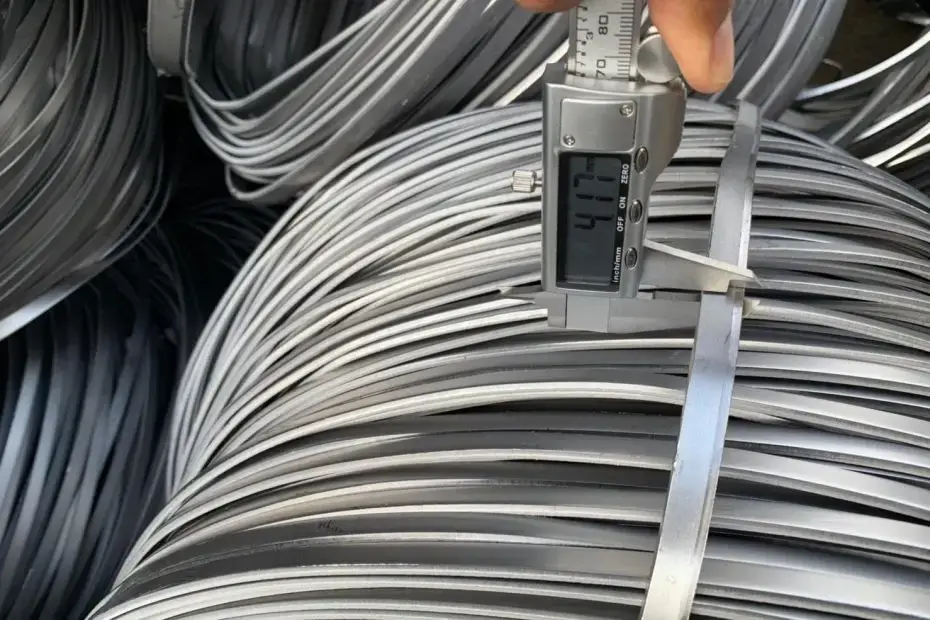
The removed strips form edge trimming scrap, which is typically wound tightly into coils or bobbins. When handled and packaged correctly, this material maintains structural integrity and can be resold as a secondary raw material rather than downgraded to melting scrap.
Alternative Names for Coil Edge Cutting Scrap
There is currently no internationally recognised ISRI specification for this grade. As a result, different regions and markets use varying terminology. Common names include:
-
Bobbin scrap
-
Side cutting scrap
-
Mandrel scrap
-
Trimming scrap
-
Slit coil scrap
-
Slitter scrap
-
Hot rolled trimming scrap
Although terminology differs, these names generally refer to the same product: controlled-dimension steel strips produced during coil slitting.
Typical Specification Requirements
To be suitable for direct re-use — particularly in wire manufacturing — the material generally needs to meet the following parameters:
-
Well rolled and tightly wound (not loose or scattered)
-
Thickness: 2mm – 6mm
-
Width: 8mm – 20mm
-
Free from coatings (no galvanised, painted, or plated material)
-
Minimal rust and contamination
-
Uniform edges without excessive burrs
Material within this range is highly desirable because it can be fed directly into wire drawing or re-rolling processes, significantly reducing production costs for manufacturers.
Re-Use vs. Melting Grade Scrap
The key commercial difference lies in whether the material can be:
✅ Directly Re-Used
If thickness and width fall within required ranges, coil edge cutting scrap becomes a secondary raw material, not just scrap. This provides:
-
Lower conversion costs
-
Reduced energy consumption
-
Competitive advantage for manufacturers
-
Improved margins for importers
🔥 Downgraded to Melting Scrap
If the material is:
-
Too wide
-
Too thick
-
Too thin
-
Poorly wound
-
Coated or contaminated
It may no longer be suitable for re-use and must be sold as heavy melting scrap (HMS), typically at a lower price point.
Main Export Markets: Pakistan & India
-
Pakistan
-
India
These markets have strong domestic demand for:
-
Construction binding wire
-
Nails and fasteners
-
Fencing wire
-
Industrial wire products
The ability to reprocess trimming scrap into finished wire products provides manufacturers with a significant cost advantage over using virgin billet or imported finished wire rod.
Why Coil Edge Cutting Scrap Is Gaining Importance
As global steel manufacturing becomes more specialised and machinery more adaptable, the role of scrap metal continues to evolve.
Modern processing technology allows manufacturers to:
-
Utilise narrower input widths
-
Control tolerances more precisely
-
Reduce waste
-
Improve recycling efficiency
This trend is transforming certain scrap grades into high-value secondary materials, creating new market categories beyond traditional melting scrap.
In emerging markets particularly, coil edge cutting scrap supports:
-
Circular economy initiatives
-
Lower carbon manufacturing
-
Reduced raw material imports
-
Cost-efficient production models
Global Trading & Quality Control
Because there is no unified international specification, quality control is critical in international trade. Buyers typically request:
-
Detailed thickness and width breakdown
-
Photographs and loading videos
-
Mill origin confirmation
-
Chemical composition (when available)
-
Inspection certificates
Proper loading — typically vertical or tightly wound bobbin form — ensures material integrity during container shipping.
About Tiger International Limited
Tiger International Limited is a leading global trader and end-user of hot rolled trimming scrap and other ferrous and non-ferrous scrap metal grades.
With extensive experience in international sourcing, inspection, logistics, and containerised exports, Tiger supplies consistent, specification-controlled material to steel mills and wire manufacturers across Asia.
The company specialises in:
-
Coil edge cutting scrap
-
Hot rolled trimming scrap
-
Plate & structural scrap
-
Ferrous and non-ferrous secondary materials
Through strict quality control and established supply chains, Tiger International delivers competitive, reliable scrap metal solutions to global buyers.