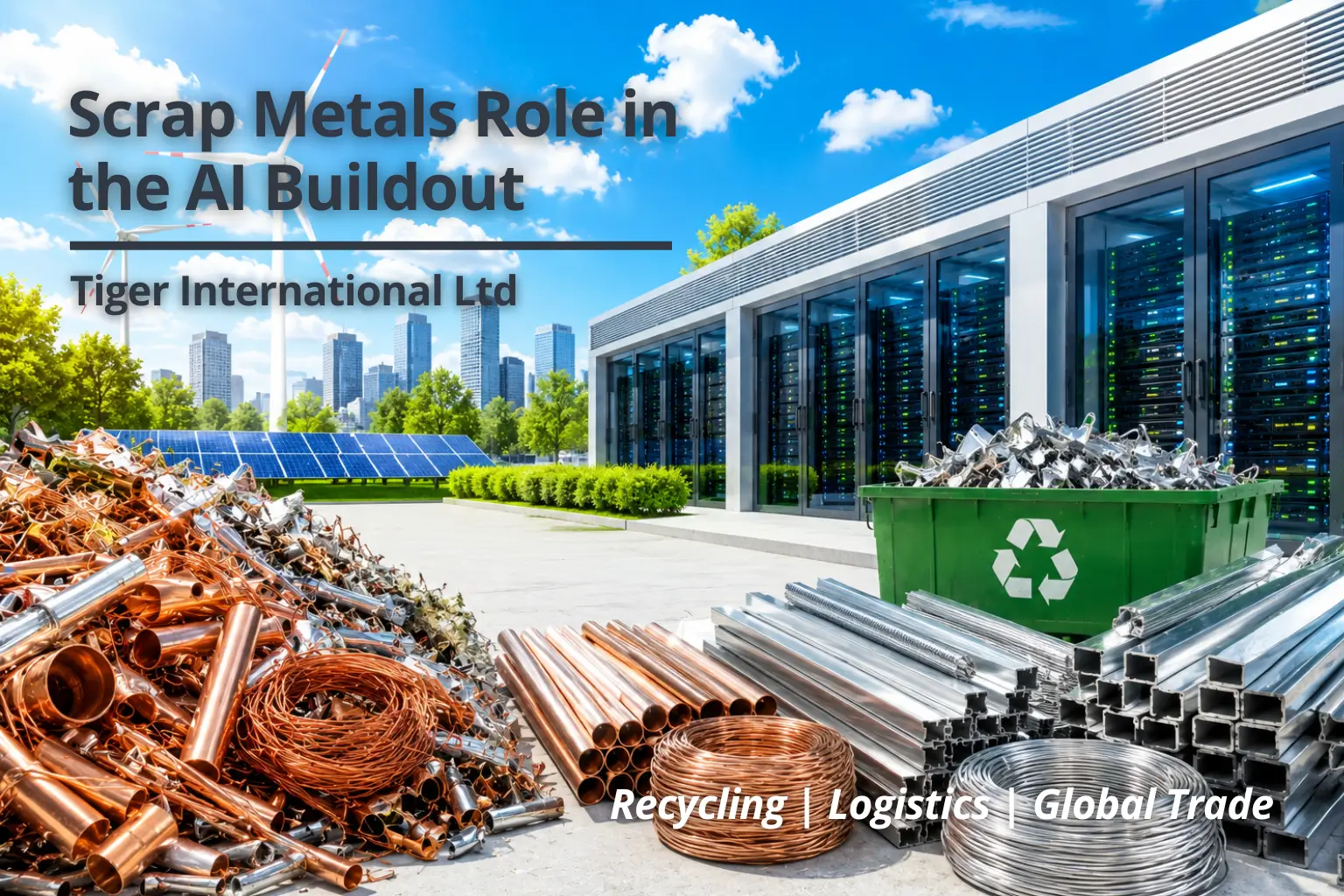
How AI Data Centres Are Driving Demand for Scrap Metal and Recycled Materials
The AI Revolution Is Creating a New Boom for Scrap Metal
Artificial Intelligence is transforming industries worldwide, but few people realise that behind every AI breakthrough sits a massive physical infrastructure built from metals.
From AI data centres and cloud computing facilities to high-performance servers and power grids, the growth of artificial intelligence is creating unprecedented demand for copper, aluminium, steel, nickel, and other critical metals.
As technology companies invest hundreds of billions of dollars into AI infrastructure, recycled metals and scrap metal exports are becoming increasingly important to support this global expansion.
What Is an AI Data Centre?
AI data centres are specialised facilities that house thousands of powerful computer servers designed to train and run artificial intelligence models.
Companies such as:
- NVIDIA
- Microsoft
- Amazon
- Meta
are investing billions into expanding their AI capabilities.
Each new AI data centre requires enormous quantities of metals for construction, electrical systems, cooling infrastructure, networking equipment, and server hardware.
Why AI Needs So Much Copper
Copper is arguably the most important metal in the AI revolution.
Every AI data centre relies on copper for:
- Power distribution systems
- High-speed networking cables
- Transformers
- Electrical switchgear
- Cooling systems
- Backup power infrastructure
A single large AI data centre can require thousands of tonnes of copper throughout its construction and operation.
As AI adoption accelerates, analysts expect global copper demand to increase significantly over the coming decade.
This creates a major opportunity for copper recycling and copper scrap exports.
Aluminium’s Growing Role in AI Infrastructure
Aluminium is another critical metal supporting AI growth.
Data centres use aluminium in:
- Server racks
- Cooling systems
- Structural components
- Power equipment
- Heat exchangers
Because aluminium is lightweight, corrosion resistant, and highly recyclable, it has become an essential material in modern data centre construction.
Recycled aluminium can be produced using up to 95% less energy than primary aluminium production, making it attractive for companies focused on sustainability and carbon reduction.
Steel and the Foundation of Data Centres
While copper and aluminium often receive the most attention, steel remains the backbone of every data centre project.
Steel is used in:
- Building structures
- Reinforcement systems
- Equipment housing
- Cable management systems
- Security infrastructure
The rapid expansion of AI facilities worldwide is creating growing demand for both virgin and recycled steel products.
This trend supports increased demand for ferrous scrap and steel recycling.
The Hidden Opportunity: End-of-Life Technology Recycling
AI is not only increasing demand for metals; it is also creating future recycling opportunities.
As older servers, networking equipment, and electronic infrastructure are replaced by newer AI-capable hardware, significant quantities of recoverable materials enter the recycling stream.
These assets often contain:
- Copper
- Aluminium
- Stainless steel
- Gold
- Silver
- Palladium
- Rare earth elements
Technology recycling is becoming one of the fastest-growing segments of the global recycling industry.
Why Scrap Metal Is Becoming Strategically Important
Governments and manufacturers increasingly recognise recycled metals as a strategic resource.
Building new mines can take years or even decades, while recycled metals can be processed and returned to manufacturing supply chains much more quickly.
For AI infrastructure developers seeking reliable material supplies, recycled metals help:
- Reduce costs
- Improve sustainability
- Lower carbon emissions
- Support circular economy initiatives
- Reduce dependence on primary mining
This is one reason why copper scrap, aluminium scrap, and high-quality recycled metals continue to attract strong global demand.
How Scrap Metal Exporters Benefit from AI Growth
Many people view AI and scrap metal as unrelated industries.
In reality, every new AI data centre requires substantial quantities of metals, much of which can be sourced through recycling.
As investment in AI infrastructure continues across North America, Europe, the Middle East, and Asia, demand for recycled metals is expected to remain strong.
Exporters supplying:
- Copper scrap
- Aluminium scrap
- Stainless steel scrap
- Ferrous scrap
- Electric motor scrap
- Electronic recycling materials
are positioned to benefit from one of the most significant industrial trends of the decade.
The Future of AI and Recycled Metals
Artificial Intelligence is reshaping the global economy, but it is also reshaping commodity markets.
The world needs more data centres.
Data centres need more metals.
And increasingly, those metals will come from recycling.
As the AI revolution accelerates, scrap metal recycling and international scrap exports will play an increasingly important role in supplying the materials needed to build the digital infrastructure of the future.
About Tiger International Ltd
Tiger International Ltd specialises in sourcing, trading, and exporting ferrous and non-ferrous scrap metals to international markets.
We sell scrap metal to buyers across Asia, the Middle East, and global manufacturing hubs, supporting the circular economy and helping industries secure sustainable metal supplies for future growth.